

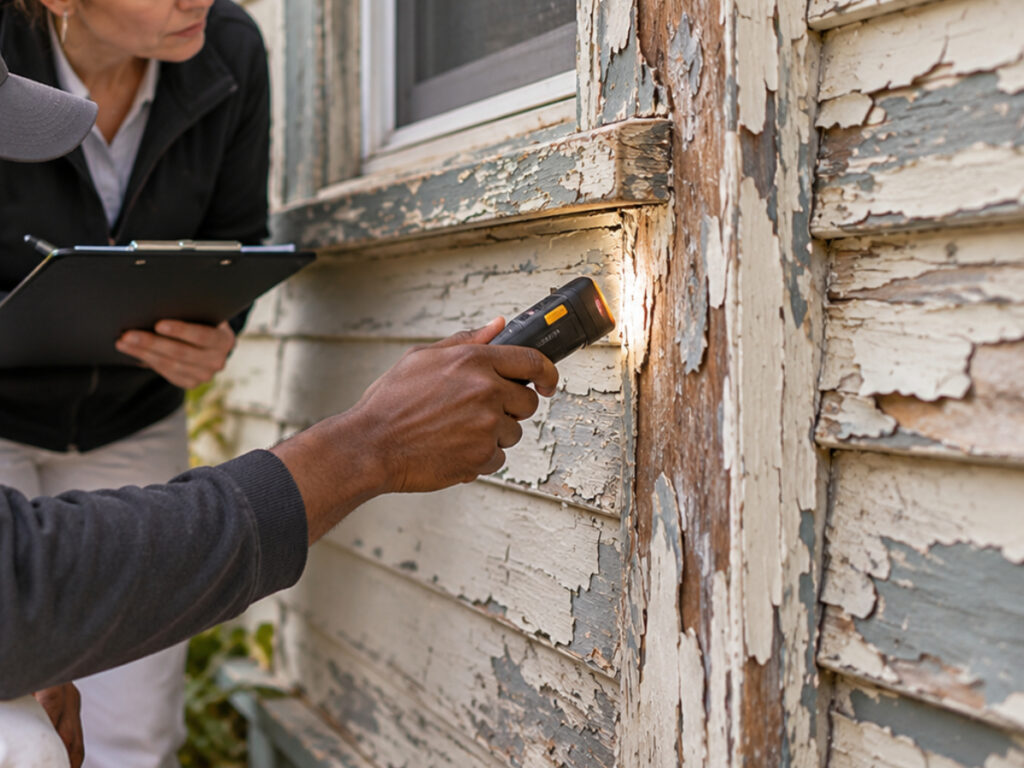
Painting an older home usually takes more investigation before the first coat ever goes on. The condition of the existing paint, the wood underneath, and any moisture problems can all affect how the job needs to be handled. And if the home was built before 1978, lead-safe practices become an important part of the conversation too.
That is why a good paint job on an older house starts with understanding what is already there. In this guide, we’ll walk through what homeowners should know before work begins, including old paint layers, wood condition, moisture issues, surface preparation, and lead-safe practices.
What Makes Painting Old Houses Different?
Older homes have usually been painted several times over the decades, and those layers can create problems of their own. Paint can crack, lift, or peel, and years of buildup can hide what is happening to the surface underneath.
Wood siding and trim add another variable. As wood ages, it can weather, soften, or develop moisture-related damage that is not always obvious from the ground. Once scraping and prep begin, those hidden issues can become much easier to see.
That is why an older house usually needs a closer look before painting starts. The condition of the existing coatings matters, but so does the condition of the material underneath them.
What Surfaces Do Older Homes Usually Have?
The older homes we work on most often have wood or aluminum siding, with stucco showing up occasionally as well. Each surface ages differently, so knowing what is on the house helps determine what kind of preparation the project will need.
Wood, for example, may need scraping, repairs, or spot priming before it is ready for paint. Aluminum brings its own surface-prep considerations. Identifying the material and its condition is one of the first steps in deciding how to approach the job.
How Do You Know If an Old House Has Lead Paint?
Lead-based paint was banned for residential use in 1978, but it is still present in millions of older homes. If your house was built before then, there is a chance the existing paint contains lead. That matters because sanding, scraping, cutting, and other surface preparation can create hazardous dust and paint chips.
Before hiring a painter for a pre-1978 home, ask how the company handles lead-safe work. The EPA recommends using an EPA- or state-certified lead-safe contractor. Homeowners can also search the EPA’s database of certified firms and look for the Lead-Safe Certified Firm logo.
Cloute is an EPA Lead-Safe Certified Firm, and when we are working on a pre-1978 home with lead-based paint, our crews follow EPA lead-safe procedures. We soft wash rather than pressure wash so we do not disturb the existing paint more than necessary. We also establish a containment area with plastic sheeting and use the required protective equipment.
From there, we carefully remove loose paint while containing and collecting chips and dust. Once that work is complete, we clean the area, prepare and prime the surface, and then move forward with the new paint.
What Prep Does an Old House Need Before Painting?
Prep is what gives an older home a lasting finish instead of a short-lived one. The exact process depends on the condition of the existing paint, the surface underneath, and whether lead-based paint is present.
For a home without lead-based paint, we typically power-wash the exterior and let it dry for a couple of days. From there, we scrape away loose or peeling paint, caulk gaps as needed, fill holes, address minor surface issues, and prime any exposed areas before painting.
Older homes often need more attention at each of those steps because there may be years of wear, moisture exposure, and previous coatings to work through. If moisture is causing the paint to fail, address that issue first. Otherwise, fresh paint may only cover the problem temporarily.
Cracks need the same kind of attention. If a crack is tied to a larger issue, simply filling it with caulk may not hold. Cracks need the same kind of attention. If a crack is tied to a larger issue, simply filling it with caulk may not hold. The repair needs to match the cause and condition of the surface before new paint goes on.
The number of finish coats depends on the existing surface and color. We generally apply two coats when changing colors and may use one coat when repainting the same color, as long as the surface condition and product specifications allow it.
Why Moisture and Wood Condition Come First
When paint peels from an older home, moisture is often part of the problem. Water behind the paint weakens its bond to the wood, and eventually the coating bubbles, cracks, or peels. Repainting without addressing the source of that moisture can put the new finish right back in the same situation.
Wood condition matters just as much. We often find peeling paint, bubbling, and rot around trim and other areas that take the most weather. Those signs can point to moisture intrusion, deteriorated coatings, or wood beginning to fail, so we inspect the surface closely before deciding what prep the house needs.
If we find rotted wood or siding that has deteriorated beyond what normal paint prep can address, we recommend repairing or replacing it before we move forward with painting. Paint can protect a properly prepared surface, but it cannot correct structural deterioration or restore rotted wood.
Our crews can handle certain wood repairs, so we can often address those issues before painting begins. We typically price that repair work separately, since the extent of the damage is often hard to judge until we can see it up close.
Want to see the kind of work we’re talking about? Take a look at our project gallery to see examples of finished painting and exterior projects.
Questions to Ask Before Hiring a Painter for an Old House
Older homes tend to come with more variables, which makes the estimate conversation especially important. A few specific questions up front can tell you a lot about how thoroughly a painter evaluated the house and what the proposal actually includes.
- Lead-safe certification: If your home was built before 1978, ask whether the firm is EPA- or state-certified and how the crew handles containment, dust, and paint chips.
- Preparation: Ask what washing, scraping, caulking, patching, and priming are included in the estimate.
- Repairs: Ask what happens if the crew finds rotted or damaged wood and how that work will be priced.
- Moisture: Ask how the painter evaluates peeling or bubbling paint and whether there may be an underlying moisture problem that needs attention first.
Clear answers to those questions can help you understand whether two estimates really cover the same work. With an older home, the details behind the number matter just as much as the number itself.
Does Painting an Old House Cost More?
Age alone doesn’t determine what a painting project will cost. The bigger question is what decades of weather, previous coatings, moisture, and repairs have left behind.
An older home in good condition may not require dramatically more work than a newer one. But a house with peeling layers of paint, deteriorated wood, difficult access, or lead-safe requirements can take considerably more preparation and may need separately priced repairs before painting begins.
Our guide to exterior painting cost breaks down the other factors that can affect the price, including home size, surface condition, and the scope of the project.
Know What You’re Working With Before You Paint
An older house can be difficult to evaluate from the street. Layers of paint may hide damaged wood, moisture problems may not be obvious at first, and some issues only become clear once someone gets close enough to inspect the surface.
That is why the first step should be a careful look at what is already there. If you’re planning to paint an older home, schedule a free estimate. We’ll walk the property, explain what we see, point out anything that may need attention before painting, and give you a clear proposal for the work.
Frequently Asked Questions About Painting Old Houses
Old houses come with more unknowns than newer ones, so homeowners tend to ask the same handful of questions. Here are some of the most common.
Q. What should I know before painting an old house?
A. Check the condition of the existing paint and wood, look for sources of moisture, and find out whether the house may contain lead paint. Prep and repairs often decide how long the new finish lasts, so they deserve as much attention as the paint color.
Q. Does an old house need special prep before painting?
A. Often it needs more of the usual prep. Where there is no lead-based paint, that means power washing and a couple of days of drying, then scraping loose paint, caulking, filling holes, and priming bare spots. Any moisture problem or damaged wood should be addressed before painting.
Q. What kind of siding do older homes usually have?
A. Wood siding and aluminum siding are the most common on the older homes we paint, with stucco showing up occasionally.
Q. How many coats of paint does an older home need?
A. It depends on the existing surface and color. Generally, we apply two coats when changing colors, and we may use one coat when repainting the same color if the surface and product allow it.
Q. Does my old house have lead paint?
A. If your home was built before 1978, it may contain lead-based paint. The only way to know for sure is to test it. If lead is present, use lead-safe practices to contain dust and paint chips.
Q. Can you paint over peeling paint on an old house?
A. Loose and peeling paint needs to be removed first, since new paint won’t hold to a surface that is already lifting. If moisture is causing the peeling, find the source before repainting.
Q. Does painting an old house cost more?
A. It can. Extra prep and repairs add time, and siding, trim, and fascia repairs are usually priced separately. A walkthrough gives you the clearest picture of what your house needs.
Q. Should I fix moisture problems before painting?
A. Yes. Paint applied over an active moisture problem is likely to peel again. Track down the source first, then repaint.
Q. When does wood need to be repaired before painting an old house?
A. When there is rotted wood or siding that has deteriorated beyond what paint prep can address. Paint can’t fix structural damage or restore rotted wood, so repair or replacement comes first.