

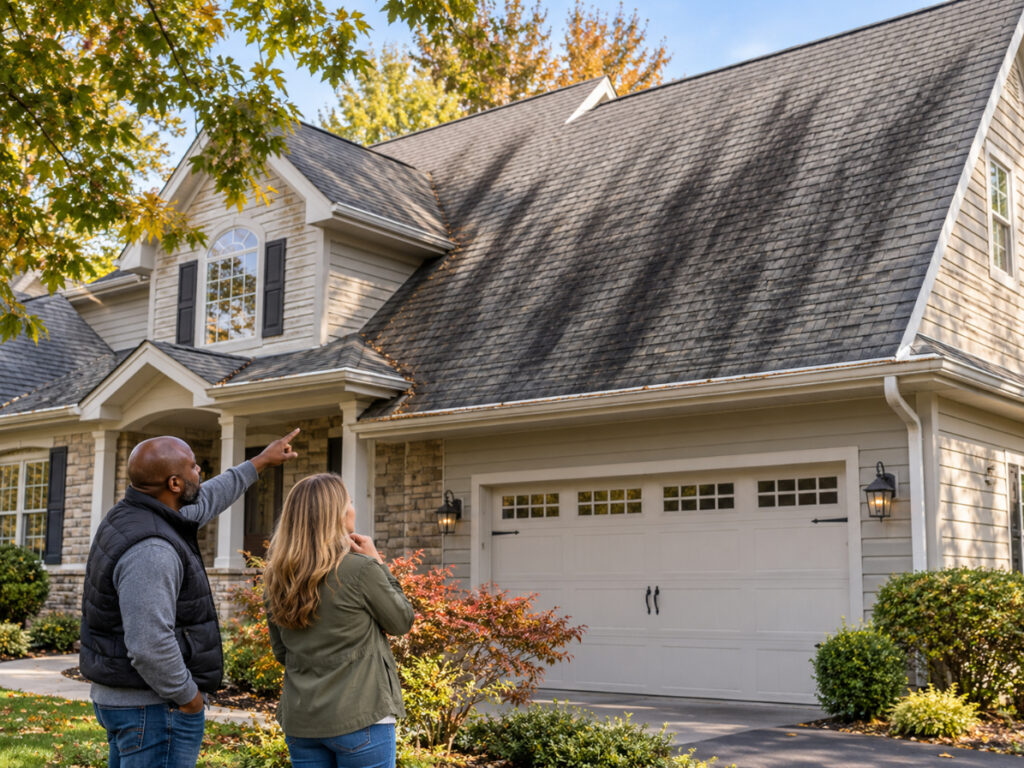
The black streaks on your roof are hard to ignore once you notice them. They can make an otherwise well-kept home look older or dirtier than it really is, and they often leave homeowners wondering whether they are just cosmetic or a sign of a bigger problem.
Most of the time, those streaks are a mix of algae, mold, and mildew. The growth travels through the air, lands on shingles, and thrives wherever moisture and shade give it a foothold. At first, the streaks are mostly cosmetic. Left in place for years, though, they can thicken into moss and may start aging the shingles underneath.
From the driveway, those dark stripes can look like someone dragged a dirty paintbrush down your roofline. In this guide, we’ll explain what causes them, why they tend to show up where they do, and how we clean roofs in Fort Atkinson and the surrounding area without relying on high pressure.
What Causes Black Streaks on a Roof?
Black streaks are basically algae, mold, and mildew, with algae usually leading the way. The most common culprit is a type of algae called Gloeocapsa magma. Its spores travel through the air, collect on roofing surfaces, and grow, and the natural pigments the algae produce are what turn a roof dark brown or black. Algae can also feed on the calcium carbonate found in many asphalt shingles, so a shingle roof makes a pretty welcoming home.
From the ground, that growth can look a lot like soot or dirt. But it is living growth, and over time it can build up and become more noticeable. As the buildup gets heavier, you may start seeing thicker moss growth instead of just dark streaks. Because it is living growth, removing it takes more than plain water.
Why the Streaks Show Up Where They Do
Algae needs moisture, and shade is what keeps a roof damp. Think of the way moss tends to grow on the north side of a tree. The north side of your roof often shows streaks first for the same reason: anything that gets less sun stays wet longer.
Sun helps by drying the roof more quickly and making it harder for algae to take hold. Add heavy tree cover, humid Wisconsin summers, and mature trees shading so many lots here, and algae has plenty of opportunity to grow.
Because the spores travel through the air, even a clean roof isn’t immune. If nearby roofs have started to darken, yours can eventually develop the same growth. The streaks are easiest to spot on light-colored shingles, though algae can grow on many roofing materials.
Do Black Streaks on Your Roof Cause Damage?
In the early stages, the damage is mostly cosmetic. A streaky roof can drag down your home’s curb appeal, which matters whether you’re getting ready to sell or just tired of wincing every time you pull into the driveway. Over time, though, the moisture that algae holds against the surface may age the shingles prematurely.
That is a good reason to deal with streaks rather than ignore them for years, and an even better reason to deal with them gently. How a roof gets cleaned matters a great deal.
How a Roof Cleaning Works
A roof cleaning is a soft wash, the same basic method we use on siding, but with a stronger cleaning solution. The solution goes on at low pressure — think of a garden hose on steroids. The cleaning solution, rather than pressure, does the work of breaking down the algae, mold, and mildew on the roof.
Here is the part that surprises people: we don’t rinse the roof. We want the solution to sit and keep working, then let Mother Nature rinse it away gradually. Rinsing too aggressively can take shingle granules with it. Some companies rinse and some don’t, but our approach is to use low pressure, give the solution time to work, and let the weather take care of the rest.
Which Roofs Can Be Cleaned?
We clean three main types of roofs: asphalt shingles, metal, and TPO, the rubber roofing membrane commonly used on flat roofs. We don’t clean cedar. Cedar is a whole different ballgame and really calls for a specialist, so it isn’t something we take on.
We can clean most roofs as long as they aren’t already significantly damaged. If our technicians arrive and find that a roof is too far gone, we may recommend holding off on cleaning and addressing the roof itself first. An older roof isn’t automatically off the table, though. In some cases, cleaning an older but still serviceable roof may help a homeowner get a few more years out of it before replacement.
Metal roofs often give us some of the most dramatic results, especially white ones. We’ve seen white barn roofs get so dark with buildup that they look black or green, and cleaning can bring them back much closer to their original appearance. Asphalt shingles clean up well too, though the before-and-after difference isn’t always quite as dramatic.
Why Pressure Washing a Roof Can Do More Harm Than Good
Shingles are covered in protective granules, and aggressive cleaning can knock them loose. Guidance from the Asphalt Roofing Manufacturers Association, published by the International Institute of Building Enclosure Consultants, advises against high-pressure washing systems for algae removal and warns that even scrubbing can loosen granules and shorten the life of a shingle.
We have seen the damage firsthand. After another company pressure washed a roof, we went in to clean the homeowner’s gutters. The roof still looked rough, and the gutters were full of granules that had been knocked loose from the shingles.
That is exactly why we avoid using high pressure on a roof. Once those protective granules are gone, you can’t put them back, and the damage can shorten the life of the shingles or lead to an earlier replacement. A roof should come out of a cleaning in better condition than it started, not with a new problem underneath the surface.
Protecting Your Plants During a Roof Cleaning
Whatever runs off a roof eventually makes its way to the landscaping below, so protecting plants is part of the cleaning process from the beginning. We use the same basic precautions we use when soft washing siding: wet the plants before we start, apply the roof treatment, and then wet the landscaping again afterward.
The cleaning solution is sodium hypochlorite, a main ingredient in bleach, and we use proportioners to control the strength of the mix. That matters because the roof needs a strong enough solution to break down the algae, mold, and mildew without creating unnecessary risk for the plants underneath.
Timing helps too. Spring and fall are generally easier on landscaping because the temperatures are milder. The dead of summer can be tougher on plants, so we pay close attention to how much water they are getting before and after the treatment. If you have especially delicate plants, flower beds, or landscaping close to the house, it is worth pointing them out before we begin so we can plan around them.
How Long Does a Roof Cleaning Last?
Cleaning removes the growth that is already there, but it can’t stop new spores from drifting in. In our experience, the results last about three to five years. That used to be five to seven, so streaks seem to be returning faster than they once did. We back the work with a one-year guarantee: if the streaks come back within a year, so do we. Industry guidance notes the same thing, that results from cleaning alone can be temporary, so a few preventive steps are worth knowing about:
- Zinc or copper strips: metal strips installed beneath the ridge shingles release trace amounts of metal as rain runs across them. They do work, but a lot of the time they cause more trouble than they’re worth. In harsh, algae-prone parts of the country we can see the case for them. Around Wisconsin, we don’t recommend them.
- Algae-resistant shingles: several major manufacturers make shingles with copper granules designed to fight algae, an option worth raising whenever a replacement is on the horizon.
- More sunlight and airflow: trimming overhanging branches may reduce the shade that keeps a roof damp.
Strips and shingles are roofing work, so they’re a conversation for a roofer. Keeping the surface clean is where we come in.
Should You Clean Black Streaks Off Yourself?
It’s tempting. The streaks are right there, and the hose is within reach. But a roof is a poor place for an experiment. Scrubbing or high pressure can strip away the protective granules on the shingles, and then there’s the risk of getting up on the roof itself.
We’ve heard plenty of stories about homeowners who have fallen while trying to clean a roof, and even a relatively low fall can cause serious, lasting injuries.
When Is a Roof a Good Candidate for Cleaning?
From the ground, algae, moss, and other growth can be hard to tell apart, and it isn’t always easy to judge the condition of the roof underneath. When we look at a roof, we check whether the growth is still at the streak stage or has thickened into moss, along with any signs of damage that cleaning won’t fix.
If black streaks have started showing up on your roof, schedule a free estimate. We’ll take a closer look at what’s growing there, tell you whether cleaning makes sense, and plan the work around your roof condition and landscaping.
Frequently Asked Questions About Black Streaks on Roofs in Wisconsin
Roof streaks raise a lot of questions, mostly about whether they’re harmful and how to get rid of them safely. Here are some of the ones homeowners ask.
Q. What are those black streaks on your roof?
A. They are usually a mix of algae, mold, and mildew, led by algae such as Gloeocapsa magma. The growth spreads through the air, takes hold on shingles wherever moisture and shade allow, and produces natural pigments that turn the roof dark brown or black.
Q. Is the black stuff on my roof mold or algae?
A. Usually a bit of both. The streaks are a mix of algae, mold, and mildew. From the ground, it can look like soot or dirt, but it is a living growth that needs a cleaning solution to remove, and left long enough it thickens into moss.
Q. Are black streaks bad for my roof?
A. In the early stages, they are mostly cosmetic. Over time, the moisture algae holds against the surface may age shingles prematurely, which is one reason to deal with streaks rather than ignore them for years.
Q. Can you pressure wash black streaks off a roof?
A. High pressure is a poor fit for shingles. Industry guidance advises against high-pressure washing for algae removal, and even scrubbing can loosen the protective granules on a shingle. We have seen pressure damage severe enough to dramatically shorten a roof’s life or force an early replacement.
Q. How long does a roof cleaning last, and will black streaks come back?
A. They can come back because spores travel through the air, and cleaning alone may only be temporary. In our experience, the results last about three to five years, and we offer a one-year guarantee. We don’t recommend zinc or copper strips around Wisconsin, but algae-resistant shingles can help slow the return when a replacement is on the horizon.
Q. Why are the streaks on the north side of my roof?
A. North-facing slopes get the least direct sun, so they stay damp longer, and algae likes damp shade. The sun dries out the sunnier sides and can clear growth there on its own, which is why the first stains often appear on the shadier ones.
Q. Do you rinse the roof after cleaning it?
A. No. We let the solution sit and let the weather rinse it off slowly. Rinsing too fast can take shingle granules along with the growth.
Q. What types of roofs can you clean?
A. We clean asphalt shingle, metal, and TPO rubber membrane roofs. We don’t clean cedar, and we may recommend holding off on cleaning and addressing the roof itself first.