

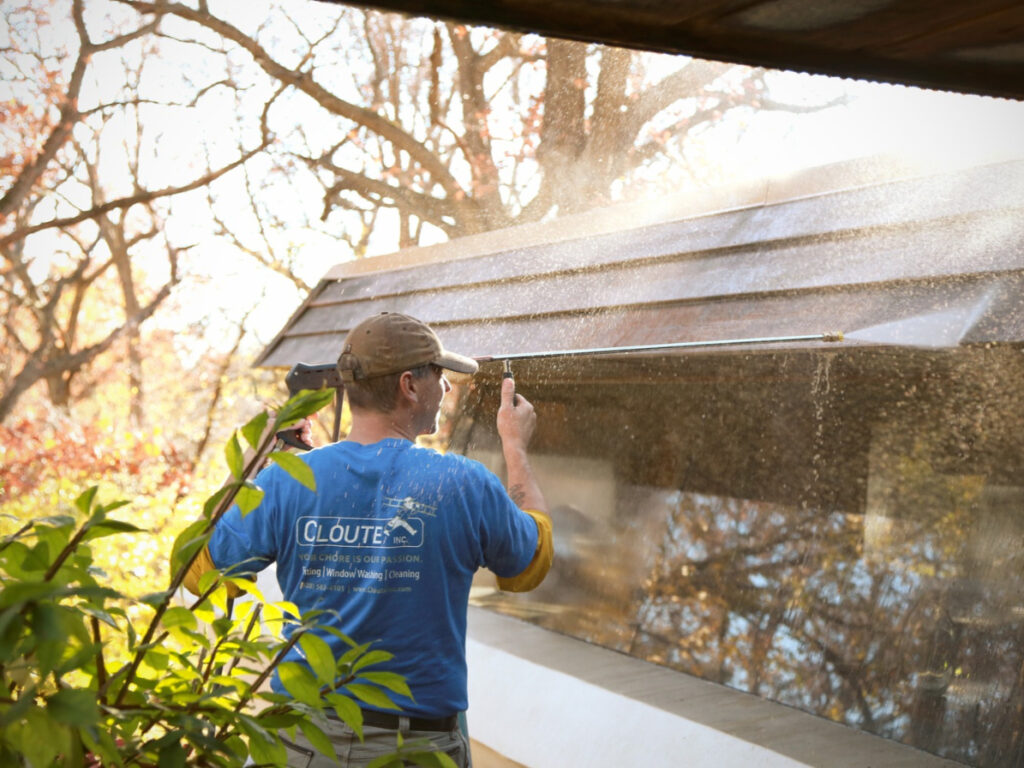
Cleaning the outside of your home sounds simple until you start looking at the different methods companies use. One of the biggest questions homeowners have is whether a surface should be soft washed or pressure washed.
Soft washing vs. pressure washing depends on the surface. Vinyl siding, stucco, and painted surfaces do best with a low-pressure soft wash, while hard surfaces like brick and concrete can handle more pressure. The safest choice is the method that removes dirt without damaging what’s underneath.
A few years ago, most homeowners who called us had never heard of soft washing and simply asked for a pressure wash. Today, plenty of them ask which method we use, which is a smart question to put to any company before it sprays your house. At Cloute we use both as part of our pressure washing and exterior cleaning services, and the choice depends on the surface in front of us.
What Is Soft Washing?
Soft washing is a cleaning method where a cleaning solution does the heavy lifting instead of high pressure. On siding and many other exterior surfaces, a high-volume, low-pressure rinse carries the debris away. The solution breaks down mold, mildew, algae, and dirt on the surface. Picture a garden hose on steroids: roughly 350 to 550 psi, compared with the 3,500 psi our equipment can reach when a job calls for it.
Water volume matters more than pressure for this work, and all of our machines move 5.5 gallons per minute. A pressure washer fitted with the right tips can deliver a soft wash, so the machine on our truck can handle either job depending on how we set it up.
The cleaning solution is sodium hypochlorite, a main ingredient in bleach, and we dilute it with proportioners so we can control the strength that goes onto your home. Siding gets a milder mix. A roof calls for a stronger one because the surface is more porous and the lichen, mold, mildew, and algae tend to be heavier up there. Roof cleaning is handled a little differently: after applying the solution to asphalt shingles, we let it remain on the roof and allow the weather to rinse it gradually rather than using pressure to rinse it off.
What Is Pressure Washing, and When Does It Make Sense?
Pressure washing puts force to work, which makes it a better fit for hard, durable surfaces like brick and concrete. Those surfaces are where more pressure can become part of the job, while the cleaning solution still helps do the lifting.
Concrete can be soft washed too, but it takes a high amount of solution to get a good result. Pressure washing is usually the more practical fit for driveways and walkways.
Which Method Is Safest for Each Part of Your Home?
The surface is what matters most when choosing a method, and a gentler approach is the starting point for anything soft. Here is how we generally handle the surfaces we see most often:
- Vinyl siding: A soft wash is the right call. Pressure washing comes into play only when the siding is being prepped for paint and oxidation needs to come off.
- Stucco: Another surface that gets a soft wash.
- Painted surfaces: Generally a soft wash, with the specifics depending on what’s under the paint.
- Brick: A hard surface where more pressure can come into play.
- Concrete: Usually pressure washed, since it’s hard enough to take it and soft washing requires a lot of solution.
Think of these as starting points. Every house has its own quirks, so our crews look at each surface before choosing the method.
Why Higher Pressure Isn’t Always Better
Plenty of people assume more pressure automatically means a better clean. It doesn’t. The goal is to use only as much pressure as the surface actually needs. The right cleaning solution combined with plenty of water volume often does more of the work.
We see the proof on concrete. When a homeowner attacks a driveway with a narrow, high-pressure tip, the result is what we call Zorro stripes: lines across the slab where the stream has taken the top layer of the concrete right off. The driveway ends up striped instead of clean.
Vinyl siding follows the same logic. If you want it to look good afterward, soft washing is the way to go. Pressure washing enters the picture only when the siding is being prepped for paint and oxidation needs to come off.
Will Soft Washing Hurt My Plants?
Plenty of homeowners tell us the last company that soft washed their house killed their plants, and that concern deserves a straight answer. A soft wash does use a bleach-based solution, and a plant can get hurt. It has happened to us, which is exactly why protecting landscaping is built into our process.
We wet your plants before treating the siding, wet them again afterward, and then rinse everything thoroughly. That process lowers the risk, though we won’t tell you it’s zero.
Timing helps too. In Wisconsin, spring and fall are the best seasons for a soft wash, and the milder conditions are also easier on plants than the dead of summer.
Please resist the urge to cover your plants with plastic before we arrive. In summer heat, plastic can cook a plant once water lands on top of it. Pre-wetting is what actually helps, along with a neutralizer for certain plants in extreme cases. If you have a prized garden along the house, mention it at your estimate so we can plan around it.
Why Your House Can Look Chalky After Washing
Paint takes the most punishment on the south and west sides of a house, where the sun hits hardest. Over time, it can break down into a chalky powder called oxidation, and a layer of mold, mildew, algae, and dirt can hide it completely.
That layer comes off during a wash, and sometimes the chalkiness underneath is the first thing you see. Homeowners are understandably surprised when that happens.
Our crews watch for oxidation while they work and will talk with you if they spot it. When we can’t see the house in person, as with some phone quotes, it is harder to catch ahead of time. That’s one reason we like to walk the property whenever we can.
The good news is that there are ways to deal with it. A different cleaning solution can address oxidation, and we still soft wash and scrub every square inch of the surface. Some homeowners choose to have us treat it as part of the job.
Getting the Right Method for Your Home
Soft washing and pressure washing each have their place. The right choice depends on the surface in front of us and what we’re trying to remove.
Our goal is simple: remove the dirt, mold, algae, or stains without damaging what’s underneath.
If you’re not sure which method your siding, brick, or concrete needs, schedule a free estimate. We’ll look at each surface, explain what we’d use and why, and point out anything worth planning around, such as oxidation or plants close to the house.
Frequently Asked Questions About Soft Washing vs Pressure Washing in Wisconsin
The right method can change from one surface of a house to the next, so these questions come up on a lot of our estimates. Here are some of the ones homeowners ask us most often.
Q. Soft washing vs pressure washing: what’s safest for your Wisconsin home?
A. It depends on the surface. Soft washing is the safer choice for vinyl siding, stucco, and painted surfaces, while brick and concrete can handle more pressure. The safest method is the one that cleans the surface without damaging it.
Q. What is soft washing?
A. Soft washing is a cleaning method that uses a cleaning solution to break down mold, mildew, algae, and dirt, followed by a high-volume, low-pressure rinse. At Cloute, the solution is sodium hypochlorite, a main ingredient in bleach, diluted with proportioners to the strength each surface calls for.
Q. Is soft washing safe for vinyl siding?
A. Yes. Vinyl siding is one of the surfaces we soft wash. We use pressure washing on vinyl only when the siding is being prepped for paint and the oxidation needs to come off.
Q. Will soft washing kill my plants?
A. It can happen, which is why protecting landscaping is part of our process. We wet plants before treating the siding, wet them again afterward, and finish with a thorough rinse. Spring and fall are also easier on plants than the heat of summer, and covering plants with plastic in hot weather can do more harm than good.
Q. Can you soft wash concrete?
A. Yes, but it takes a high amount of cleaning solution to get a good result. Concrete is a hard surface, so we usually pressure wash it, with the cleaning solution still helping to lift the dirt.
Q. Why does my house look chalky after it’s been washed?
A. Chalkiness after a wash is often oxidation, the breakdown of paint into a powder that dirt, mold, or mildew can hide until the surface is cleaned. It shows up most on the south and west sides of a house. A different cleaning solution can treat the oxidation while we still soft wash the surface.